Why the Neck Ages Differently
The neck is often the first place age shows, and it troubles many patients more than any single change in the face. There are anatomical reasons for that. Neck skin is thinner than facial skin and has less underlying support, so it loses elasticity noticeably once collagen production slows. It is also in almost constant motion: every turn of the head, and every hour spent looking down at a screen, folds and stretches the same delicate tissue.
Beneath the skin lies the platysma, a broad, thin sheet of muscle running from the collarbone up over the jaw. In youth it sits flat and smooth. With age its inner edges can loosen and drift apart, and when the muscle contracts those separated edges show through the skin as the familiar vertical neck bands.
Fat behaves differently here too. Some of it sits directly under the skin, but a deeper compartment lies beneath the platysma itself. When that deeper fat is generous, often for genetic reasons, it creates the full, heavy look under the chin that patients describe as a double chin, even at a healthy, stable weight.
Skin, muscle and fat each age in their own way. That is precisely why no single neck procedure suits everyone, and why an accurate diagnosis of which layer is responsible matters more than the name of any operation.
What a Neck Lift Does
A neck lift is the surgical response to loose neck skin and a lax platysma. In Dr. Cömert's practice it is designed to achieve several things in one procedure:
- tighten loose, excess skin so the neck sits cleanly against its underlying structures;
- tighten the lax platysma and correct visible banding;
- redefine the jawline so the border between face and neck reads clearly again;
- reduce a sagging, double-chin appearance by contouring fat where needed, and removing excess skin where it has genuinely stretched.
Not every neck needs every step. In one patient the dominant problem is skin excess, in another it is muscle laxity, in a third it is deeper fullness beneath reasonably good skin. The operation is assembled from these elements after careful assessment of what is actually causing the change, which is why two neck lifts can be quite different procedures under the same name.
What the 'Deep' in Deep Neck Lift Means
A conventional neck lift concentrates on the layers reached from just beneath the skin: the skin itself, the surface fat and the front surface of the platysma. A deep neck lift goes a step further. The term describes surgery that also addresses the layer beneath the platysma, where the deeper structures that shape the neck sit.
That deeper plane matters because some of the most stubborn neck concerns do not come from skin at all. Some of the fullness that shapes the area beneath the chin sits below the muscle rather than under the skin, which is why it can persist at a stable, healthy weight. Addressing that deeper layer directly is what sets a deep neck lift apart from approaches that work only above the muscle.
Working in this plane calls for detailed anatomical knowledge and an unhurried, methodical technique, so it belongs in experienced hands. The reward, when it is chosen for the right reasons, is a neckline shaped from within rather than skin stretched over an unchanged foundation.

Platysmaplasty, Explained
Platysmaplasty is the part of neck surgery that deals with the muscle itself. Through a short incision hidden in the crease under the chin, the separated inner edges of the platysma are brought back together and stitched at the midline, rebuilding one continuous, supportive layer across the front of the neck.
The repair does two jobs at once:
- it corrects the vertical cords that appear when loose muscle edges push against thinning skin;
- it restores a firm muscular sling beneath the chin and jawline, which supports the new contour created during surgery and helps it hold its shape.
Platysmaplasty is rarely a stand-alone operation. It is commonly built into a neck lift or a lower facelift, because muscle repair works best when skin and deeper tissues are addressed in the same session. If you have read about a corset platysmaplasty, the phrase describes the same principle: the muscle edges joined evenly at the midline along the front of the neck.
Why Neck and Face Are Usually Treated Together
Patients often ask for a neck lift, and their photographs then show that the jowls and cheeks have descended as well. That is an anatomical observation, not a sales pitch: the soft tissues of the lower face and neck are continuous and tend to age as one unit. Tightening the neck while leaving descended jowls untouched can look mismatched, a crisp neckline meeting a heavy lower face.
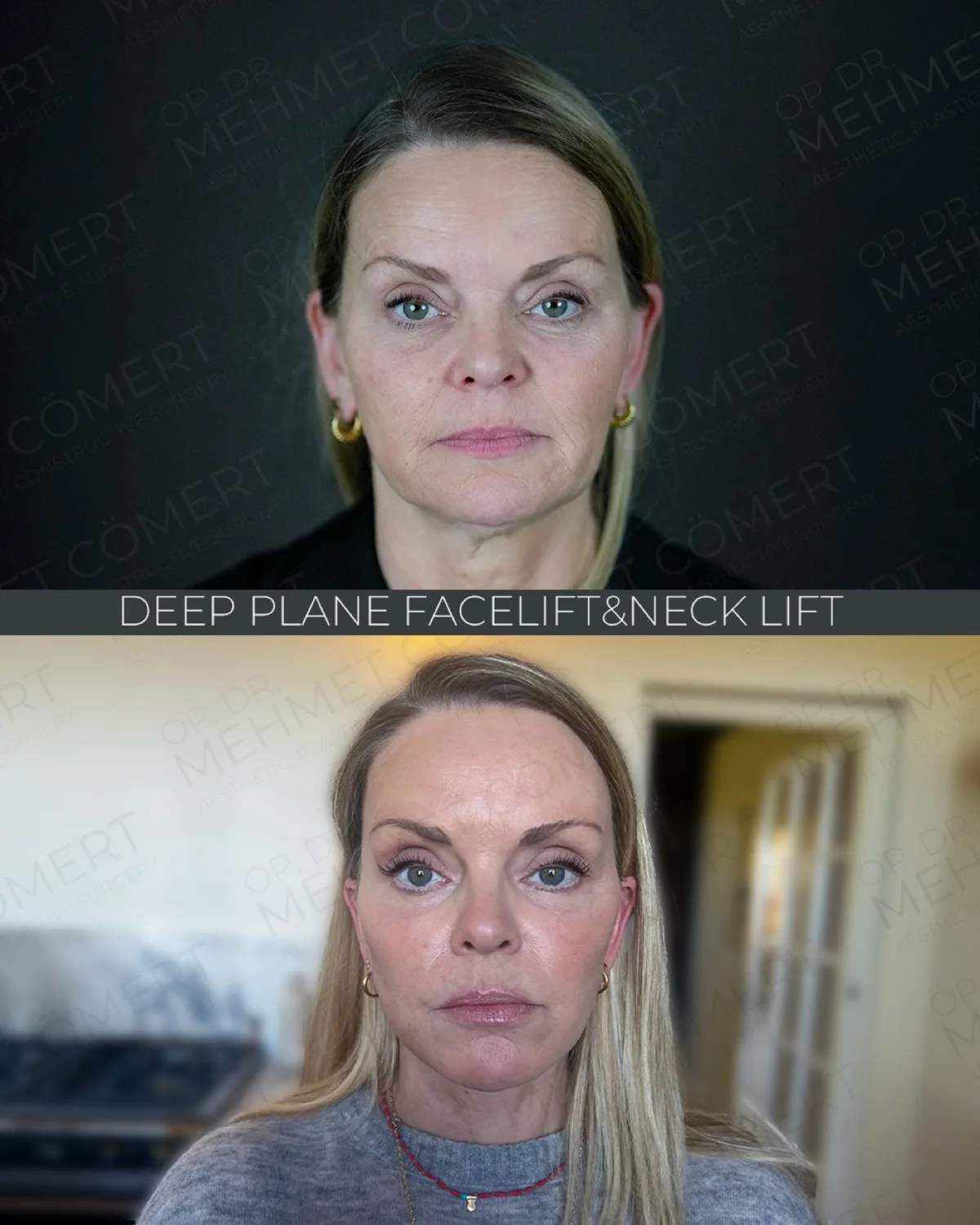
This is why Dr. Cömert usually treats cheeks, jowls and neck together within an extended deep plane face and neck lift. Instead of tightening skin, the deep plane approach lifts and repositions the deeper muscular layer, the SMAS, so the foundation of the face and neck is restored as a whole. Results look natural, avoid any pulled appearance, and last considerably longer, because the correction happens at a structural level.
Where appropriate, a combined plan can also take in the upper face, from a forehead lift to eyelid surgery, an approach explored in our guide to full facial rejuvenation. None of this means every patient needs everything. It means the plan should follow the anatomy, not the other way around.
Who Is a Candidate for a Neck-Only Procedure
A deep neck lift on its own, without a facelift, is the right operation for a smaller but very real group of patients. They typically share a few features:
- the changes that bother them sit almost entirely below the jaw: fullness under the chin, early banding, a soft or blunted neck angle;
- the cheeks and jowls still have good support, so the lower face does not yet need repositioning;
- their weight is stable, yet fullness under the chin persists, which can reflect deeper fat beneath the muscle rather than surface fat.
The patient shown earlier in this guide is a genuine example: 46 years old, from Australia, treated with a deep neck lift only and photographed one month after surgery. No facelift was performed, because the ageing was concentrated in the neck and the midface did not need surgical support. Further examples are collected in the deep neck lift gallery.
Candidacy also involves general health. For facelift surgery, a BMI above 27 can affect anaesthesia safety and the planning of results, so weight is discussed openly at the assessment stage rather than discovered as an obstacle later. The choice between a neck-only procedure and a combined plan is made case by case, from photographs and history first, then in consultation.
Incisions and Scars, in Plain Terms
Neck surgery uses a small number of deliberately placed incisions, and their position is largely dictated by anatomy:
- Under the chin: a short incision concealed in the natural submental crease gives access to the platysma and to the deeper structures beneath it. This is the working incision of a deep neck lift and of platysmaplasty.
- Around and behind the ear: when loose skin must be redraped or removed, incisions follow the natural creases in front of the ear and continue discreetly behind it, into areas shielded by the ear itself and the hairline.
Freshly healed incisions look pink at first, then soften and fade progressively as the scar matures. Because the lines sit in creases, shadows and hair-bearing skin, they are designed to be hard to spot in everyday life. Scar care is part of the written aftercare plan, and healing is reviewed during follow-up, including remotely once you are back home.
What Recovery Feels Like
Recovery from neck surgery has a distinctive character, and knowing it in advance makes the early days considerably calmer.
Expect a feeling of firmness and tightness at the beginning; this is a normal part of early healing, and your aftercare instructions explain how to manage it. Swelling and some bruising are normal and settle gradually through the first weeks. Temporary changes in skin sensation can occur while the tissues heal, and they are reviewed as part of your follow-up.
Chewing and opening the mouth widely can feel strange at first, so many patients prefer gentle meals in the early days; our soft food guide after facial surgery covers this in practical detail. Sleeping slightly elevated, avoiding strenuous effort early on and protecting the healing neck from the sun are the recurring themes of aftercare.
The contour you see early is not the final result. Deeper swelling resolves slowly, and the neckline continues to refine over the following months. The one-month photographs of the neck-only patient earlier in this guide show an early stage of healing; the combined case is shown at four months precisely because refinement continues over time.
Having a Deep Neck Lift in Istanbul
International patients considering neck lift surgery in Istanbul tend to ask the same sensible questions: who operates, where, and what happens after flying home. Our anatomy-first guide to a neck lift in Turkey covers how to choose, layer by layer.
Dr. Mehmet Cömert has performed more than 2,400 operations since 2009 and has treated patients from 48 countries. He trained on Dr. Bryan Mendelson's deep plane course at the Mayo Clinic in 2023, became a Fellow of EBOPRAS in 2024, and serves as guest faculty at FaceAcademy 360 in 2026. His practice holds the Turkish Ministry of Health's International Health Tourism Authorization, and surgery takes place in a partner hospital in Beşiktaş with a full anaesthesia team.
The practical structure of a visit is deliberately simple:
- a patient coordinator in Istanbul manages appointments, transfers and day-to-day questions throughout your stay;
- when a deep neck lift is performed as part of an extended deep plane face and neck lift, the hospital stay is two nights;
- after you fly home, follow-up continues remotely, with the team reviewing your healing at agreed points.
How long to remain in Istanbul after surgery depends on the individual plan and is confirmed before you book travel, so that early healing and checks are completed before the flight home.
The Next Step: A Free Online Assessment
Reading about neck anatomy is useful, but no article can tell you whether your neck needs skin tightening, muscle repair, deeper contouring or a combined face and neck plan. Photographs can.
Dr. Cömert offers a free online assessment: you send photographs and a short medical history, he reviews them personally, and you receive an answer within 1 to 3 days. The reply sets out what he would recommend and why, whether that is a deep neck lift alone, an extended deep plane face and neck lift, or, in some cases, reassurance that surgery is not the right step yet.
There is no obligation attached. The purpose is a clear, personal answer to the question this guide can only frame in general terms: what is actually happening in your neck, and what would genuinely improve it.