
Key takeaways
- Obstructive sleep apnea (OSA), also called obstructive sleep apnea syndrome, is the repeated collapse of the upper airway during sleep. It is diagnosed with a sleep study, not with a scan or a photograph.
- Maxillomandibular advancement (MMA) moves both jaws forward. Because the soft palate hangs from the upper jaw and the tongue is anchored to the lower jaw, the airway behind them opens up.
- In pooled data MMA reduced the apnea-hypopnea index from about 64 to under 10 events per hour, met the usual definition of surgical success in about 85% of patients and produced a cure (AHI under 5) in roughly 40%.
- CPAP stays first-line. The 2021 AASM guideline recommends discussing referral to a sleep surgeon with adults who cannot tolerate or do not accept CPAP; it covers airway surgery in general, not MMA specifically.
- MMA changes the face as well as the airway. Planning both together, as in bimax surgery designed by a facial surgeon, is how you avoid trading a good airway for an unbalanced profile.
Most people who ask about jaw surgery for sleep apnea arrive by one of two routes. Some have been diagnosed with obstructive sleep apnea, tried CPAP and could not live with the mask. Others came for their profile, a recessed chin or a flat midface, and only later realised that the snoring, the unrefreshing sleep and the morning headaches were part of the same story. This guide is for both. It explains what maxillomandibular advancement is, what the evidence says about it, who it suits and how a plan that treats the airway can also respect the face.
What is obstructive sleep apnea syndrome?
During sleep the muscles that keep the throat open relax. In a narrow airway, that relaxation is enough for the walls to collapse: the soft palate, the tongue base and the side walls of the throat fall inward. Each partial or complete blockage is a hypopnea or an apnea, and each ends with a micro-arousal you rarely remember. The result is loud snoring, witnessed pauses in breathing, daytime sleepiness, poor concentration and morning headaches. Untreated moderate and severe OSA is linked to high blood pressure and cardiovascular disease.
| Apnea-hypopnea index (AHI) | Severity in adults |
|---|---|
| Fewer than 5 events per hour | Normal |
| 5 to 14 | Mild |
| 15 to 29 | Moderate |
| 30 or more | Severe |
The diagnosis is made with a sleep study: overnight polysomnography in a sleep laboratory or, for suitable patients, a validated home sleep apnea test, interpreted by a sleep physician. Before surgery, in-laboratory polysomnography is usually preferred. Nothing in this article replaces that step.
Why the jaws matter for the airway
The airway behind the palate and tongue has no rigid wall of its own. Its size depends on the skeleton around it. A retruded lower jaw (mandibular retrognathia), a flat or recessed upper jaw, or both, leave the tongue and palate with less room and push them backwards. That is why people with recessed jaws are more likely to snore and to have obstructive sleep apnea, and why moving the skeleton forward is one of the most powerful surgical options for the airway.
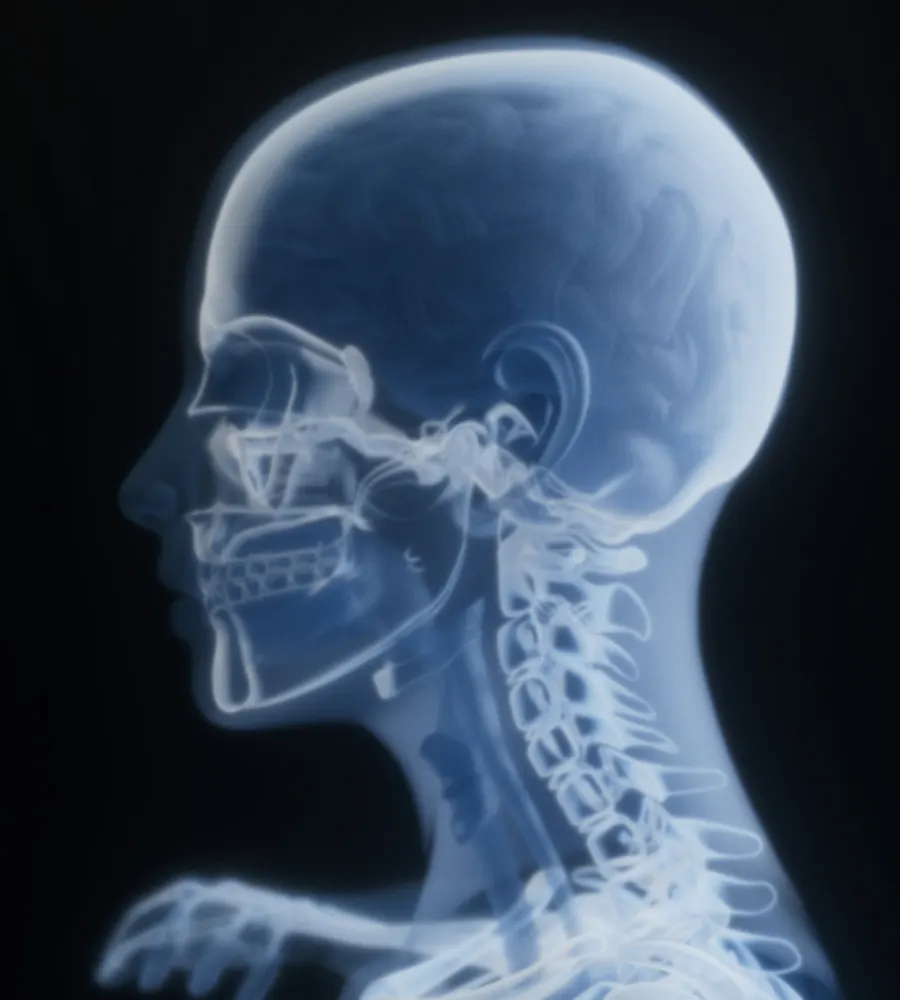
The reverse is also true. A meta-analysis of airway changes after jaw surgery found moderate evidence that isolated lower jaw setback narrows the oropharyngeal airway, while maxillomandibular advancement enlarges it. It is a good reason for anyone planning jaw surgery for aesthetic reasons to make sure the airway is part of the plan. Dr. Cömert's routine reflects this:
"When I evaluate a double jaw case, I look at facial proportions, the occlusion and the airway relation together. So I want to hear whether you have any restriction in breathing, any snoring, any apnea in your sleep."
What is maxillomandibular advancement?
Technically, MMA uses the same osteotomies as any bimaxillary surgery. The upper jaw is separated above the tooth roots (Le Fort I), the lower jaw is split on both sides behind the teeth (bilateral sagittal split osteotomy), and both are advanced together so the bite stays the same. A genioplasty or an advancement of the tongue muscle attachment is sometimes added. What makes it MMA is the goal: the movements are designed around the airway, and the forward movement is usually larger than in surgery planned for appearance alone.
Because the bite often does not need to change, some MMA patients need little or no orthodontic preparation. The decision depends on the alignment of your teeth, assessed on your scans.
How well does jaw surgery work for sleep apnea?
- Holty and Guilleminault, 2010. A meta-analysis of 627 adults: the mean AHI fell from 63.9 to 9.5 events per hour. Pooled surgical success was 86.0% and cure (AHI under 5) 43.2%. Reported major and minor complication rates were 1.0% and 3.1%, with no postoperative deaths reported.
- Zaghi and colleagues, 2016. Individual data from 518 patients, most of whom had already had other OSA surgery: 98.8% improved, the mean AHI fell by about 80%, and success and cure rates were 85.5% and 38.5%. Patients with a starting AHI under 60 were the most likely to be cured, but those above 60 still improved substantially.
- Camacho and colleagues, 2019. Long-term follow-up: improvements in AHI, sleepiness and oxygen levels were maintained in the intermediate and long term; in the small group followed beyond eight years (35 patients) the mean AHI had risen again to the moderate range, and the authors caution that definitive generalisations cannot be made.
"Success" in these studies usually means at least a 50% reduction in AHI to below 20 events per hour; "cure" means an AHI below 5. Both definitions matter when you read any clinic's claims. The factors linked to the best results were younger age, lower body weight, lower pre-operative AHI and a larger advancement of the upper jaw.
Who is a candidate for maxillomandibular advancement?
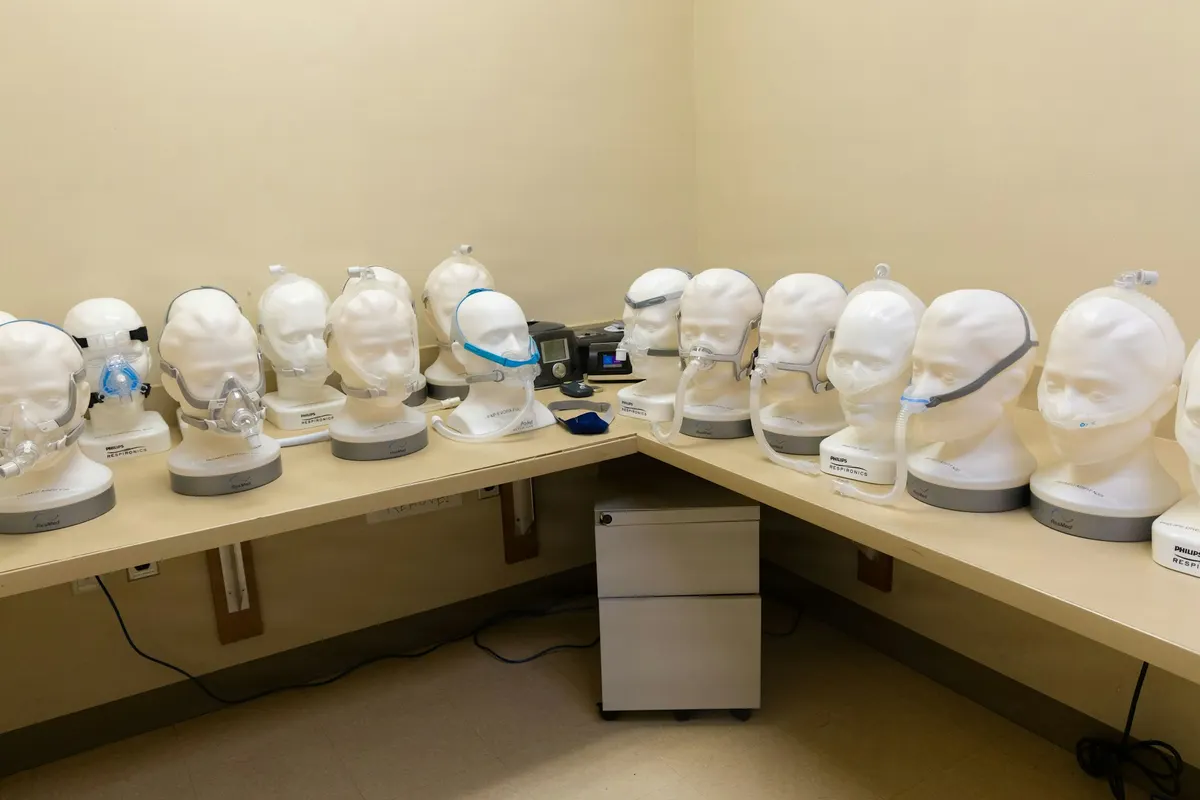
The American Academy of Sleep Medicine's 2021 guideline gives a strong recommendation that clinicians discuss referral to a sleep surgeon with adults who have OSA, a body mass index under 40 and are intolerant of or unaccepting of positive airway pressure. The guideline covers upper airway surgery in general rather than MMA specifically, and it conditionally suggests trying positive airway pressure first when a major anatomical abnormality is present. For people with a BMI of 35 or more, it also recommends discussing bariatric surgery. In practice, the best MMA candidates often have a combination of:
- moderate or severe OSA on a sleep study,
- difficulty with CPAP or a wish to avoid lifelong device treatment,
- a retruded lower jaw, a recessed midface or both,
- a stable weight and good general health.
MMA is not the only alternative to CPAP. Other options include a custom oral appliance that holds the lower jaw forward at night, hypoglossal nerve stimulation in selected patients, weight management (including medication) and treatment of nasal or tonsil obstruction. An airway assessment such as drug-induced sleep endoscopy helps decide which option fits. MMA has also worked in patients without an obvious jaw deficiency, but a recessed jaw strengthens the case for it.
The aesthetic side of the face matters too. Dr. Cömert's view is that "breathing and sleep are what can make the case for bimax stronger": when a patient already has a recessed face, the airway gives the operation a functional reason on top of the aesthetic one.
Will MMA change how I look?
This is the point where a facial plastic surgeon's perspective changes the plan. Advancing both jaws by a large distance in a face that already has a forward profile can make the mouth area look too prominent. One answer, published for patients with severe OSA and a convex facial profile, is to rotate the maxillomandibular complex counterclockwise while advancing it, so the chin and tongue base come forward more than the upper lip. In that uncontrolled series of 33 patients, some of whom also had genioplasty, throat or nasal surgery, the mean AHI fell from 59.3 to 10.2, soft tissue profile measures did not worsen, and 28 patients (85%) were satisfied or very satisfied with their facial change.
In Dr. Cömert's words, orthognathic surgery "puts the maxilla a little bit forward and improves the airway along with the balance of the face." The published results above, however, come from advancements planned for the airway, usually larger than in surgery planned for appearance alone, so a modest aesthetic bimax should not be assumed to treat sleep apnea. His planning software can also measure the upper airway on the same CT scan used to plan the bones, its volume and its narrowest cross-section, so the change can be simulated before surgery. A CT is taken awake, however, and cannot show what happens during sleep; it complements the sleep study, it does not replace it.
How MMA is planned: custom jaw surgery for the airway
MMA moves the jaws further than most aesthetic jaw surgery, which makes precision more important, not less. Planning starts with:
- Your sleep study and the sleep physician's report.
- A full CT scan of the face and airway; a tooth-only CBCT is not enough.
- Intraoral scans of the teeth and photographs of your face and bite.
- Virtual surgery: the advancement and any rotation are simulated in millimetres, with the airway and the face assessed together.
- Custom cutting guides and patient-specific plates, so the planned position is reproduced as closely as possible; accuracy is lower for the large advancements typical of MMA.
You review and confirm the plan before anything is produced. Our article on custom jaw surgery for facial asymmetry explains the guide and plate workflow in more detail.
Recovery after MMA
Recovery resembles any double jaw surgery in Istanbul: one to two nights in hospital, swelling that peaks around the third day, a staged liquid to soft diet for about six weeks (see our soft-food guide) and numbness of the lips and chin that fades over weeks to months. Patients with sleep apnea need careful airway management around anaesthesia and close oxygen monitoring after surgery, which is part of the hospital plan. A repeat sleep study once healing has settled, typically a few months after surgery, is the only objective measure of the result. International patients typically stay about 10 to 14 days in Istanbul for the first follow-ups.
Risks and limits
- Altered sensation of the lower lip and chin, common early and usually improving with time.
- Residual sleep apnea: many patients improve without reaching an AHI below 5, and some still need CPAP at a lower pressure or other treatment.
- Relapse of the jaw position, and gradual return of apnea over many years, particularly with weight gain.
- Change in facial appearance, which should be planned, not discovered.
- Nose and jaw joint changes: advancing the upper jaw can widen the base of the nose and change the tip, and the jaw joints can be affected.
- Bite changes, infection or hardware problems, which are uncommon.
Next step
If you have a sleep apnea diagnosis, or you snore and your jaw or midface sits back, start by sending your photographs, a photo of your bite, your sleep study report and a CT scan if you have one through the online assessment. Dr. Cömert reviews every jaw case personally and will tell you whether your face, bite and airway point towards MMA, a different jaw plan or a conversation with your sleep physician first.
Prepared by the practice of Op. Dr. Mehmet Cömert, European Board-certified (FEBOPRAS) plastic, reconstructive and aesthetic surgeon, Istanbul. Quotations are from Dr. Cömert's own patient consultations. Last updated 24 October 2026. This article is general information and does not replace a personal medical assessment.