Key takeaways
- Mandibular retrognathia means the lower jaw sits too far back. It gives a convex profile, a weak chin, a soft jaw-to-neck line and often an overjet (Class II bite). It is different from a small chin with a normal bite.
- The treatment depends on what is actually recessed: the chin alone (genioplasty or implant), the lower jaw (jaw advancement) or both jaws (bimax surgery, often with a counterclockwise rotation).
- Lower jaw advancement in faces with short or normal height is among the most stable movements in orthognathic surgery.
- Dr. Cömert assesses both jaws together and prefers bimax to a lower-jaw-only operation unless that is highly necessary.
- A recessed lower jaw crowds the tongue and the airway. Snoring or sleep apnea should be part of the planning conversation.
"Weak chin", "recessed jaw", "no jawline", "overbite": people describe mandibular retrognathia in many ways, and online advice ranges from chin fillers to mewing to major jaw surgery. The reason the answers differ so much is that the same profile can come from very different skeletons. This guide explains how a surgeon tells them apart, what each option can and cannot do, and why the decision between genioplasty, implants, lower jaw advancement and bimax surgery is made on a CT scan.
What is mandibular retrognathia?
Surgeons and orthodontists measure jaw position against the base of the skull. When the lower jaw sits back, the angle that describes it is reduced and the difference between the upper and lower jaws increases. Clinically you see a profile that slopes back from the lips to the chin, upper front teeth that sit well ahead of the lower ones, a chin that strains to close the lips, and a short, soft line from the chin to the neck. Related terms you may meet: micrognathia (a lower jaw that is small, not just set back) and retrogenia (a chin that is set back while the jaw and bite are normal).
| Pattern | Bite | What is recessed | Usual direction of treatment |
|---|---|---|---|
| Retrogenia (weak chin) | Normal | Chin bone only | Genioplasty or custom chin implant |
| Mandibular retrognathia | Class II, overjet | Whole lower jaw | Lower jaw advancement, usually within a bimax plan |
| Bimaxillary retrusion | Often normal | Both jaws and the lower face | Bimax with advancement and often counterclockwise rotation |
| Retrognathia with sleep apnea | Variable | Jaws and airway | Maxillomandibular advancement planned around the airway |
What causes a recessed lower jaw?
Most retrognathia is developmental: the lower jaw simply grew less, or in a different direction, than the upper jaw. Genetics plays the largest role. Facial growth direction matters too: in faces that grow more vertically, the chin rotates down and back as it grows. Less commonly, the jaw joints are involved. Changes in the condyles, the growth centres of the lower jaw, can shorten the jaw and open the bite, which is why the joints are always checked before surgery. Less commonly, congenital conditions such as Pierre Robin sequence, Treacher Collins syndrome or hemifacial microsomia are responsible, and very severe deficiency may be treated with distraction osteogenesis, which lengthens the jaw gradually.
Habits such as mouth breathing are discussed a great deal online. They may influence growth in children, but in adults no exercise, posture or "mewing" moves the jaw skeleton.
How is retrognathia diagnosed?
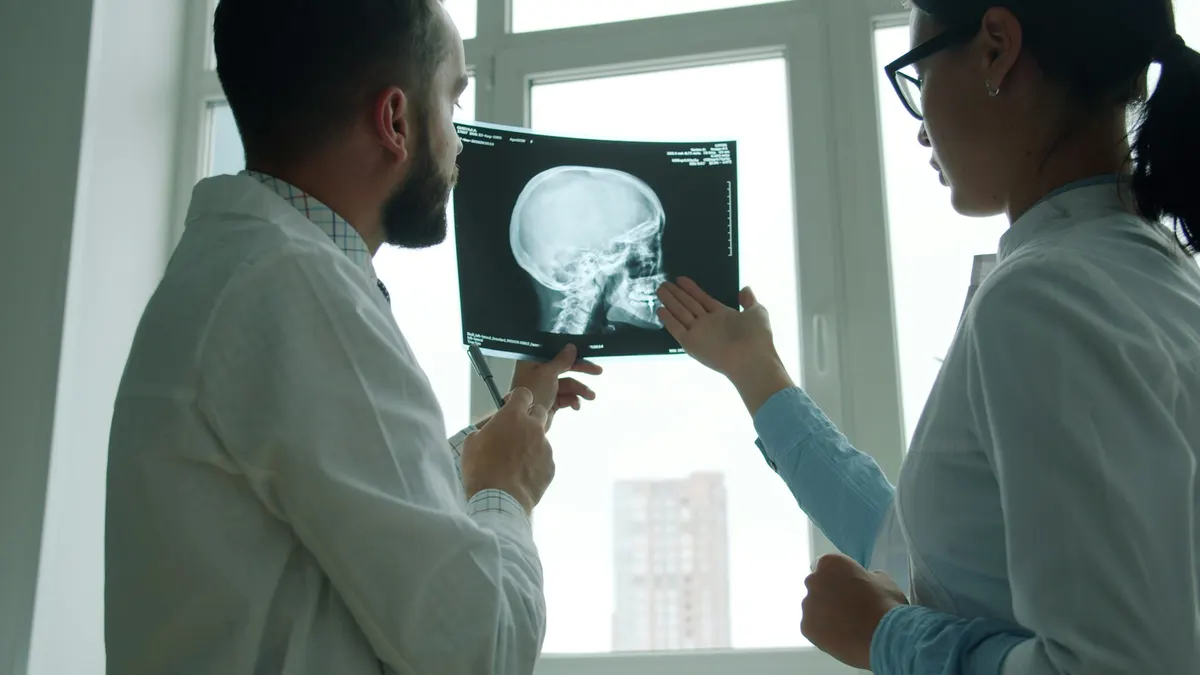
Two faces with the same weak profile can need opposite operations. In one, the chin bone is small but the jaws are well positioned: a genioplasty solves it. In the other, the whole lower two-thirds of the face lacks support. Dr. Cömert describes the second situation clearly:
"When both jaws are recessed as a whole, moving the entire upper jaw and lower face can give a better result than a sliding genioplasty alone, cosmetically and maybe even functionally."
Because photographs flatten the face and change with posture, the plan is set on a full CT scan of the face, not on photos and not on a tooth-only CBCT, together with intraoral scans of your bite.
The four ways to treat a recessed jaw
1. Genioplasty
A sliding genioplasty separates the chin bone through an incision inside the mouth and moves it forward, and if needed up, down or to the side. It moves your own bone, so the result is usually stable and natural, and in Dr. Cömert's experience it also improves the muscle balance under the chin and in the neck. Some remodelling of the chin's lower border can occur, and its risks include chin numbness and soft tissue sag. It is ideal when the bite is fine and the problem sits at the chin. It has limits: as Dr. Cömert puts it, "an advancement of 7 or 8 mm is already ambitious for a genioplasty."
2. Custom chin and jaw implants
Patient-specific implants add projection and width along the chin and jawline and are designed on your CT so they fit the bone closely. They are useful when the skeleton is in a reasonable position but lacks contour. For chin projection, Dr. Cömert prefers moving bone whenever possible, because "if you use a big prosthesis, in the long run it can make you lose a little bit of the bony tissue around your chin." Implants often complement jaw surgery rather than replace it; their risks include infection, displacement and, with large implants, erosion of the underlying bone. Our custom facial implants Q&A covers the choice in his words.
3. Lower jaw advancement (BSSO)
The bilateral sagittal split osteotomy splits the lower jaw on both sides behind the teeth and slides the tooth-bearing part forward, closing the overjet and bringing the chin forward. It is a classic, well studied operation. In the hierarchy of stability published by Proffit and colleagues, mandibular advancement in patients with short or normal face height is in the "highly stable" group. Many surgeons correct a Class II retrognathia this way, and for the right face it is a valid choice.
Dr. Cömert's approach is more selective: "I do not do mono jaw, a BSSO on its own, unless it is highly necessary." In his experience, most recessed faces involve the upper jaw and the angle of the bite as well, and treating only the lower jaw can leave the midface flat or the profile unbalanced. This is his practice philosophy rather than a rule: two-jaw surgery is a larger operation, it adds variables, and some reviews link it to a higher risk of condylar remodelling, so the decision is made case by case. In vertical (high-angle) faces, a lower-jaw-only advancement is also less stable, which is one reason the upper jaw is often included.
4. Bimax surgery with counterclockwise rotation
Bimaxillary surgery moves both jaws together. In a recessed face it can be combined with a counterclockwise rotation of the maxillomandibular complex: the whole unit of both jaws is rotated around a point near the upper front teeth so that the back of the bite comes down, the bite flattens and the chin comes forward.
Wolford and colleagues reported in the 1990s that this upward and forward rotation, long considered unstable, can be stable with proper planning, orthodontics and healthy jaw joints, and a later comparison by Reyneke and colleagues found the long-term skeletal stability of clockwise and counterclockwise rotations comparable to conventional double jaw surgery. Because the back of the bite moves down, the rotation involves lowering the back of the upper jaw, the same direction of movement that needs graft support and firm fixation in a maxillary downgraft, and forward rotation of the lower jaw has been linked to a higher risk of condylar resorption. For a recessed, convex face, the effect can be significant. In Dr. Cömert's words: "A counterclockwise rotation supports the upper lip and improves a flat philtrum; a greater advancement lengthens and projects the face more." He is equally clear that the movement must respect aesthetic limits, and that a larger advancement can carry a slightly higher risk of relapse when the bones have less contact.
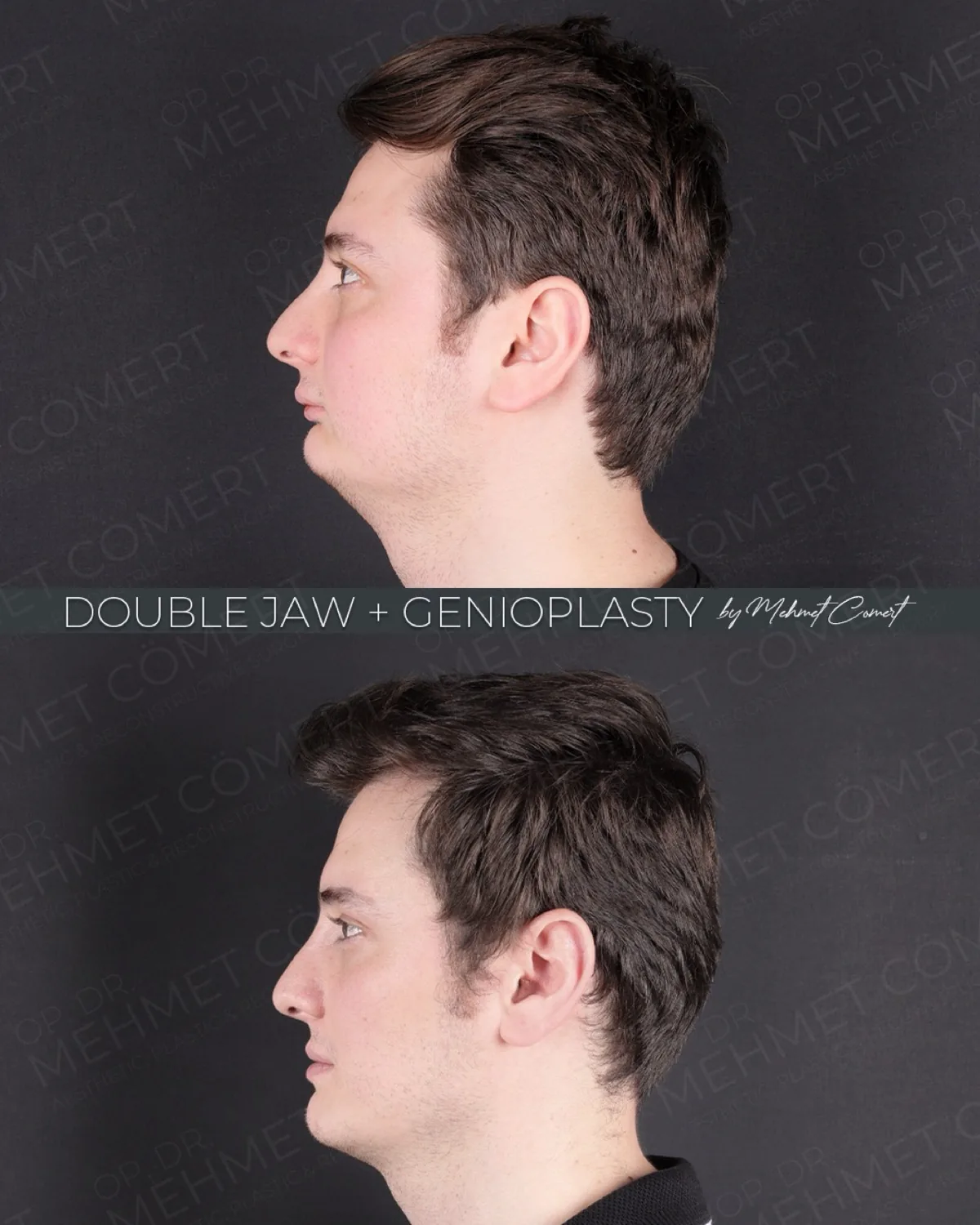
One case, photographed one month after surgery while swelling is still settling. It shows how moving the jaws changes the profile, not a promise of any individual result.
What changes after correcting retrognathia
- Profile: the chin comes forward and the face reads as straighter and stronger.
- Jaw-to-neck line: as Dr. Cömert notes, "a double-chin look caused by a recessed jaw can improve because the cause is treated."
- Lips: lip strain on closing usually eases, and the lower lip sits more naturally.
- Bite: the overjet closes and the teeth meet properly.
- Airway: moving the lower jaw forward brings the tongue with it; maxillomandibular advancement tends to enlarge the airway, while lower jaw setback tends to narrow it.
If snoring or sleep apnea are part of your history, read our guide to jaw surgery for obstructive sleep apnea. If one side of your jaw is also different from the other, see facial asymmetry and custom jaw surgery.
Braces first or surgery first?
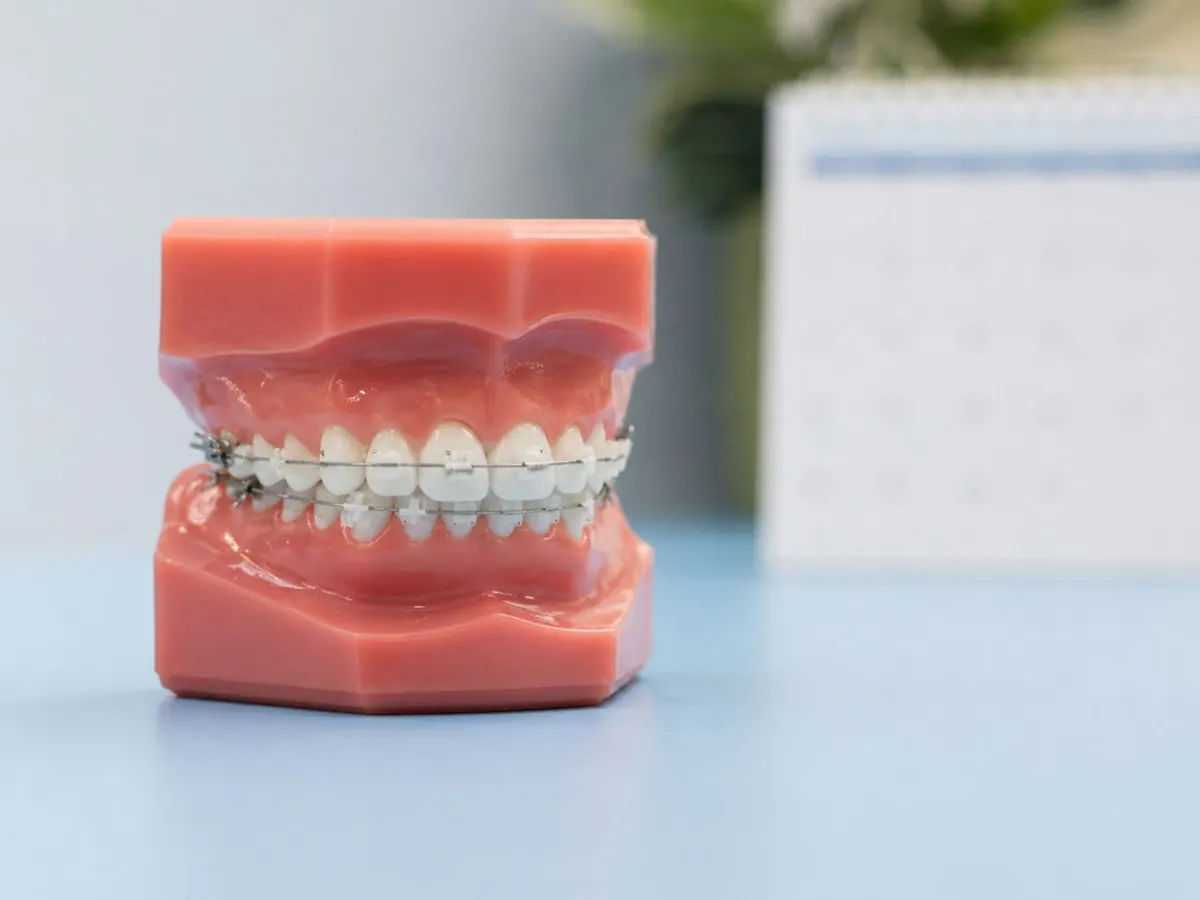
Classic retrognathia correction starts with orthodontics to decompensate the teeth, then surgery, then finishing orthodontics. That is still right for many patients with a Class II bite. But it is not the only path. If your teeth are already well aligned and the plan is a rotation, a downgraft or a slight advancement, Dr. Cömert says surgery can be done without orthodontic treatment; when they are not, a surgery-first approach with orthodontics afterwards is possible in selected cases. In a Class II bite the front teeth are often tilted to compensate, and removing that compensation usually needs orthodontics first. Your scans and your orthodontist's records decide.
Recovery and risks
Recovery follows the usual pattern for double jaw surgery in Istanbul: one to two nights in hospital, swelling that peaks around the third day, a staged liquid to soft diet for about six weeks (our soft-food guide helps), and a final result that settles over 6 to 12 months. International patients typically stay about 10 to 14 days for the first follow-ups.
The risks to discuss honestly:
- Altered sensation of the lower lip and chin. The inferior alveolar nerve runs through the lower jaw, so some numbness after a sagittal split is expected and usually improves over weeks to months. Reported rates of lasting change vary widely between studies, partly because they are measured in different ways. A minority of patients are left with some permanently reduced sensation of the lower lip or chin; this is discussed with you in advance.
- Condylar resorption. A remodelling of the jaw joint that can let the jaw drift back. A review of systematic reviews found it more likely in young patients, women, faces with a steep mandibular plane, after forward (counterclockwise) rotation of the lower jaw and after bimaxillary surgery, although the underlying reviews were of low quality. That is why the joints are assessed before planning, with MRI when a joint problem is suspected, and why the rotation is never pushed beyond what the joints can support.
- Relapse of part of the advancement, bite changes that need orthodontic fine tuning, infection and hardware problems.
Start with a diagnosis
A recessed jaw is a skeletal question with several possible answers, and the right one depends on your bite, both jaws, your joints and your airway. Send front and profile photographs, photos of your bite in full closure from the front and both sides and, if you have it, a full CT scan through the online assessment. Dr. Cömert reviews every case personally and tells you whether he would move the chin, the jaws or both, and why. For a detailed look at bimaxillary surgery, read the complete bimax guide; if your concern is a lower face that is too short rather than too far back, see short face syndrome.
Prepared by the practice of Op. Dr. Mehmet Cömert, European Board-certified (FEBOPRAS) plastic, reconstructive and aesthetic surgeon, Istanbul. Quotations are from Dr. Cömert's own patient consultations. Last updated 24 October 2026. This article is general information and does not replace a personal medical assessment.