
Bimaxillary surgery · Istanbul
Double jaw surgery, planned around your face.
Bimax surgery with Op. Dr. Mehmet Cömert, a European Board-certified (FEBOPRAS) plastic surgeon: designed in 3D from your own CT scan, and coordinated with your orthodontist at home.
For patients in the UK: Istanbul is about a four-hour direct flight from London.
For patients in the US: direct flights connect Istanbul with major US cities, including New York, Chicago and Los Angeles.
- FEBOPRASEuropean Board certified
- Since 2009in practice in Istanbul
- 48 countriespatients have travelled from
- 5 to 7 daysfor his personal reply (working days)
01 · Is bimax for you?
Five patterns that bring people to double jaw surgery
Bimax moves the upper and lower jaws together, so it changes the skeleton your face sits on, not just the surface. These are the patterns Dr. Cömert looks for. The decision is always made on your CT scan, not on photos.
A recessed lower jaw or weak chin
A convex profile, a soft jaw-to-neck line, a bite where the upper teeth sit well ahead of the lower ones.
Read about retrognathia BA lower face that is too short, or too long
Little upper tooth showing and a compressed lower face, or the opposite: a long face with a gummy smile.
Read about short face syndrome CA tilted smile or an asymmetric jaw
A chin off the midline, a jaw fuller on one side, or a bite and smile line that are not level.
Read about facial asymmetryA bite that does not meet properly
An overjet, an underbite or an open bite that orthodontics alone cannot fully correct, because the cause is in the bone.
Snoring or breathing concerns
The airway sits behind the jaws, so breathing is assessed as part of planning. Sleep apnea itself is diagnosed with a sleep study.
Read about jaw surgery and sleep apnea"I look at three things: the face, the bite and the CT."
Dr. Mehmet Cömert
Not every face needs bimax. When the gain would be small, Dr. Cömert says so; he has told patients it would be "too little of a result for too much of an invasive surgery" and suggested a genioplasty or custom implants instead.
02 · Custom planning
Your surgery is designed before it is performed
- 1
Your scans
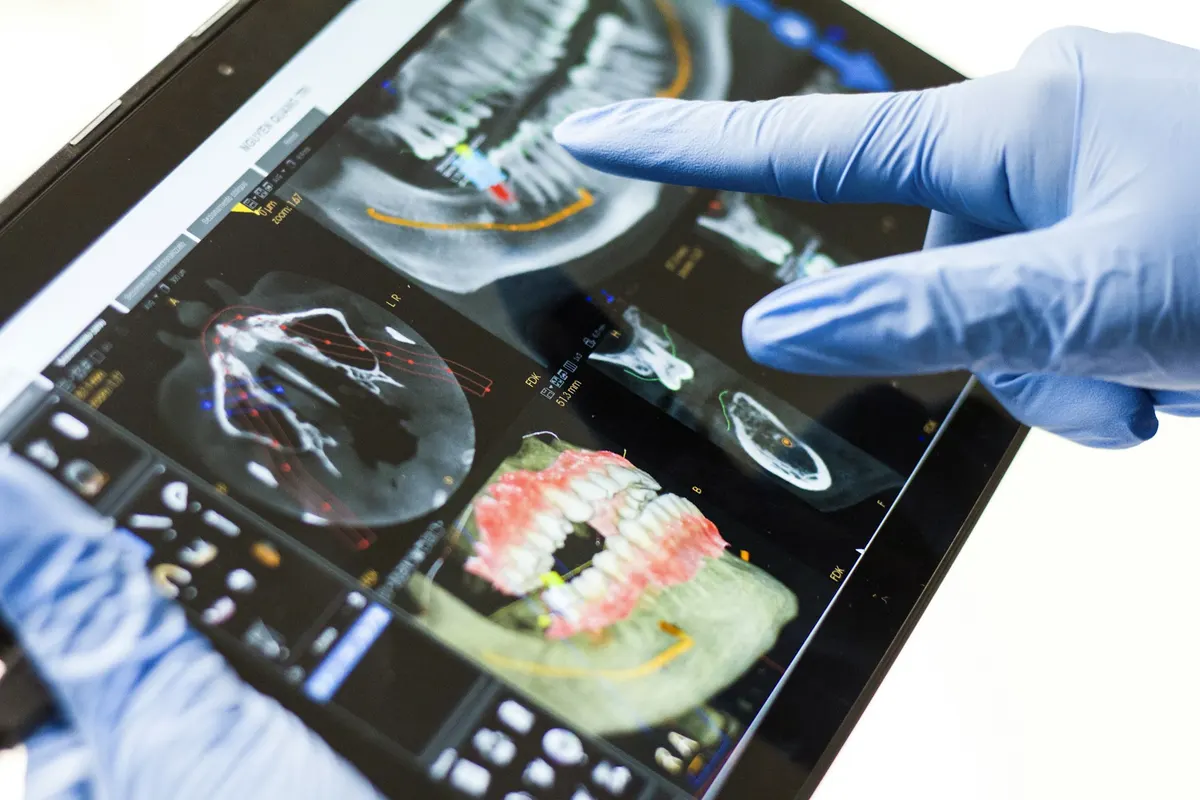
A full CT scan of the face plus intraoral scans of your teeth. A tooth-only CBCT is not enough, and Dr. Cömert works from the scan data itself, not the radiology report.
- 2
Virtual surgery
The upper jaw (Le Fort I), the lower jaw (BSSO) and, if needed, the chin (genioplasty) are moved on your 3D skull and measured in millimetres.
- 3
Your approval
You see the planned change. In Dr. Cömert's words: "You confirm the design before anything is produced."
- 4
Custom guides and plates
3D-printed cutting guides and patient-specific titanium plates carry the plan into the operating room, bringing the result very close to what you approved.
03 · Orthodontist and surgeon
Your orthodontist stays part of the plan
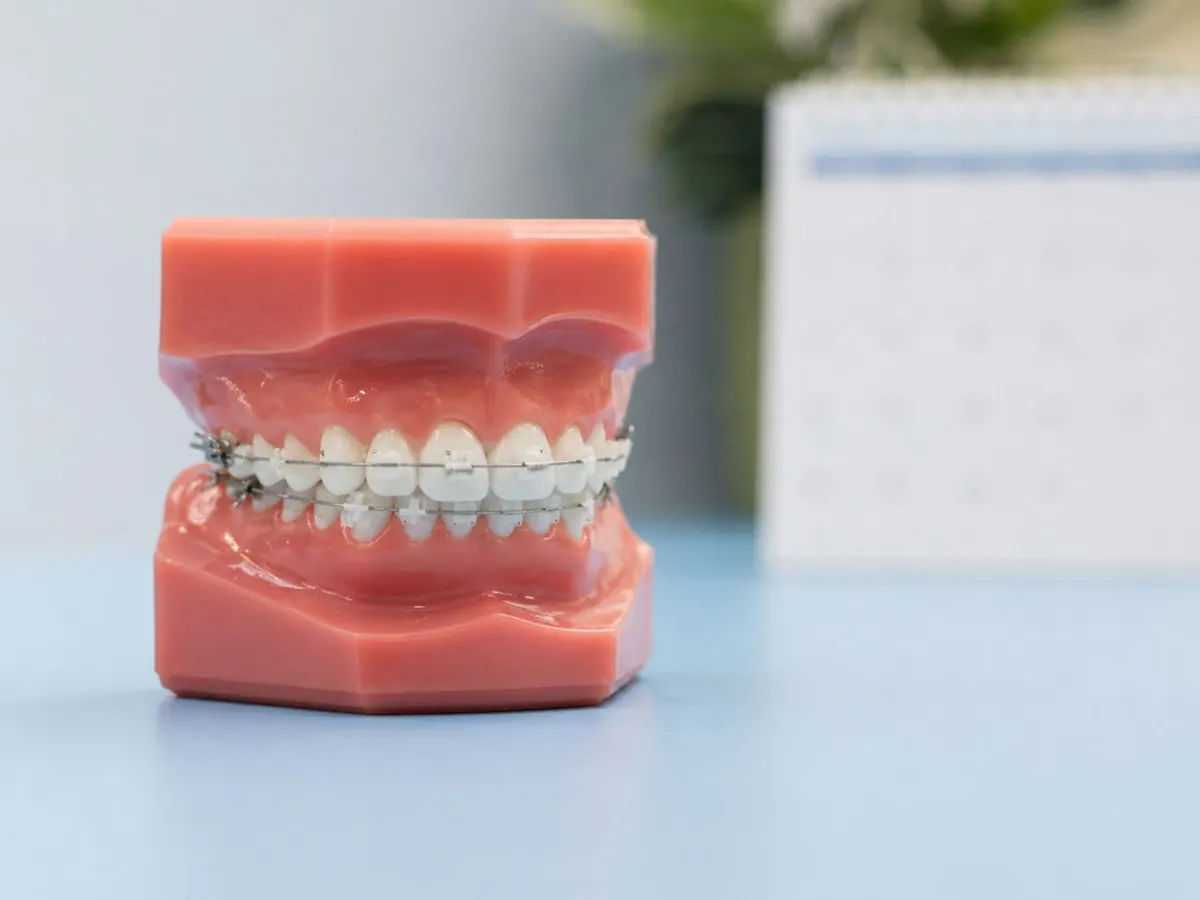
Jaw surgery works best when the surgeon and the orthodontist plan the bite together. Orthodontic preparation is coordinated with your orthodontist before and after surgery, so you can keep the orthodontist you already trust at home.
- Before: your orthodontist's records and recent scans show whether the teeth are ready or need preparation.
- The sequence: braces first, surgery first, or in some cases no braces at all. "If your teeth are aligned very well and the plan is a counterclockwise rotation, a downgraft or a slight advancement, orthognathic surgery can be done without any orthodontic treatment," Dr. Cömert explains.
- After: finishing orthodontics continues at home, with follow-up by photos and video calls.
04 · A plastic surgeon's eye
The jaws, the nose, the chin and the soft tissue, as one face
Dr. Cömert's practice is unusual in combining orthognathic surgery with aesthetic facial surgery. The plan considers the nose, chin, cheeks and soft tissues together; where a refinement remains after the skeleton is corrected, a genioplasty or a custom implant can complete it.
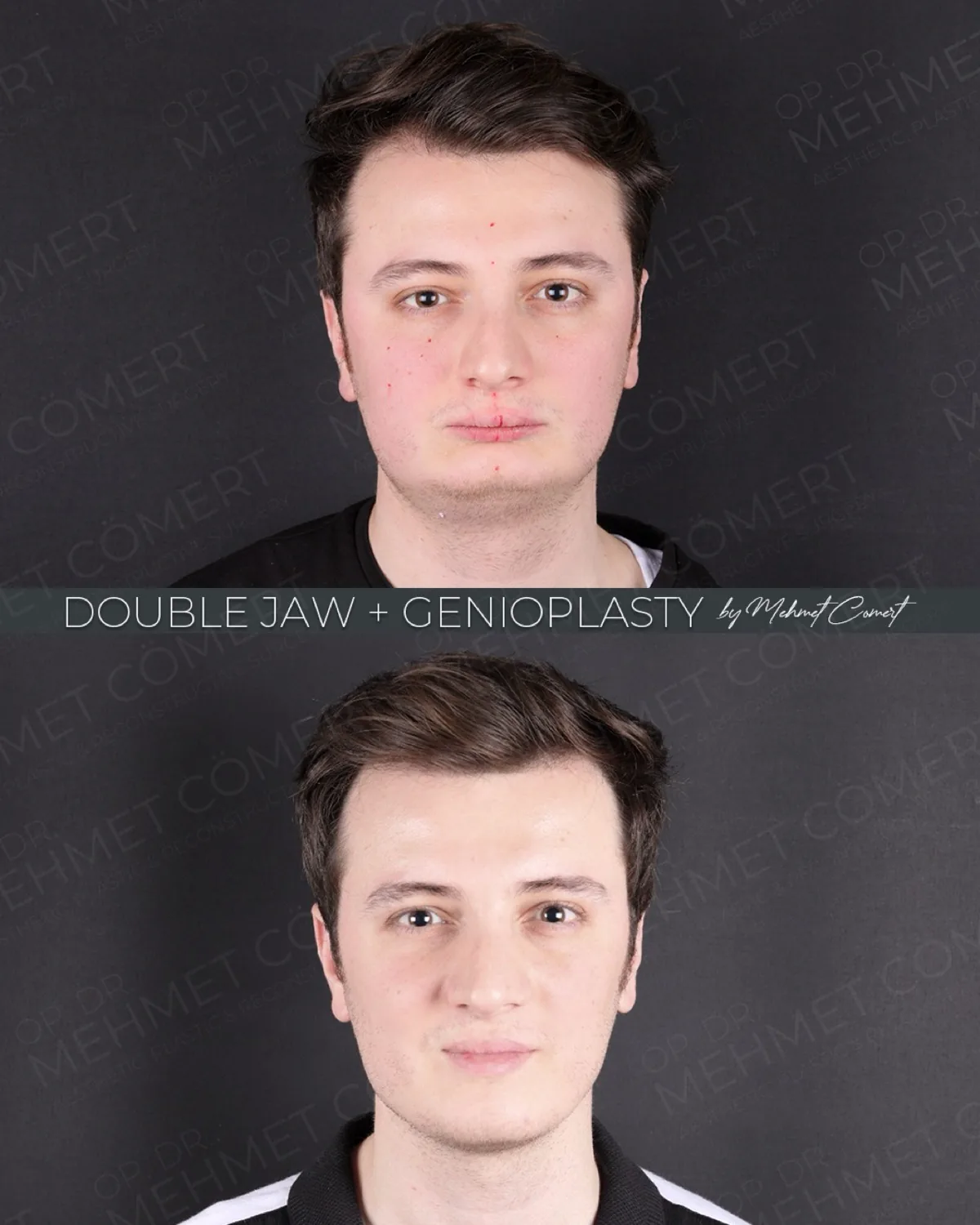
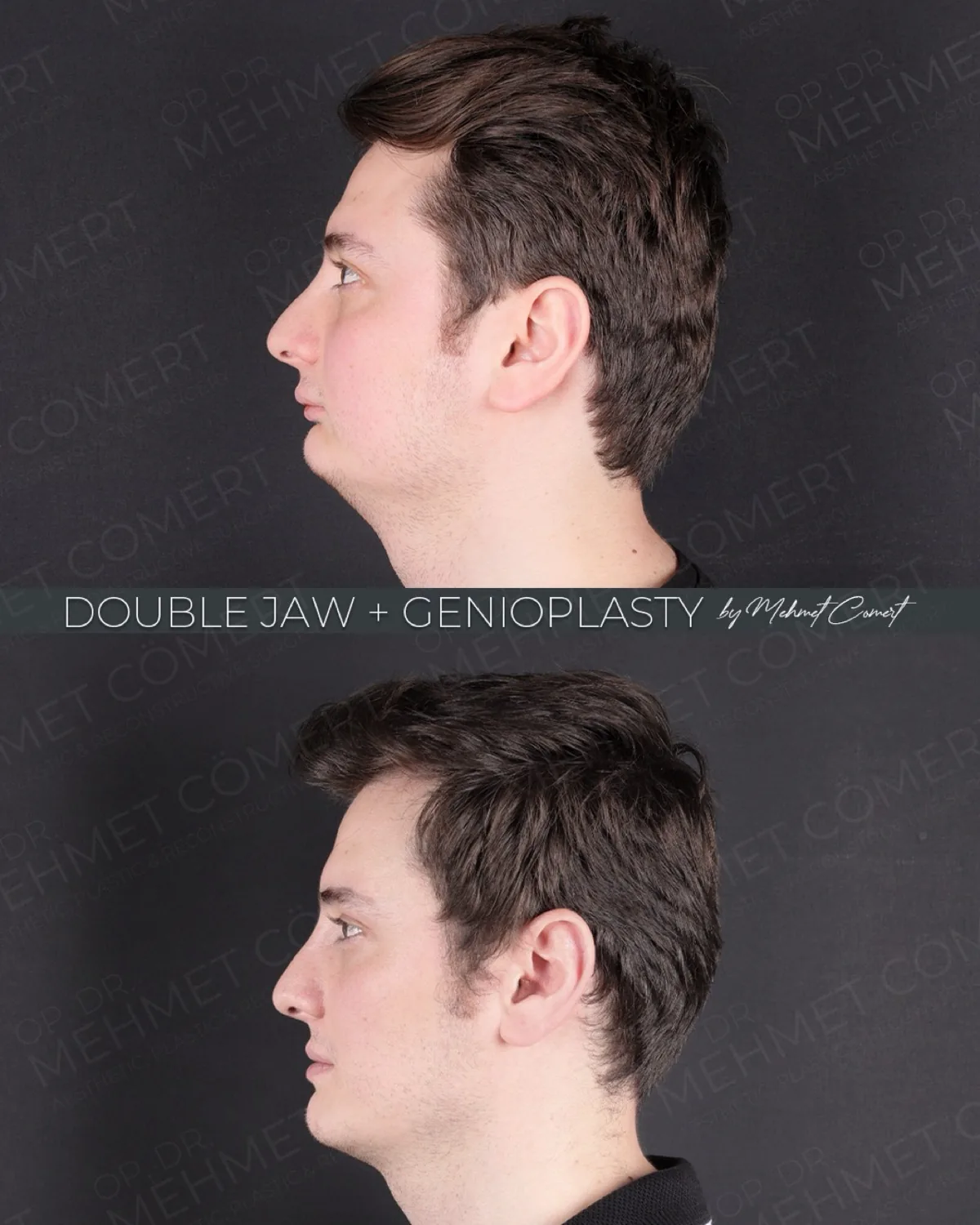
Bimaxillary surgery and genioplasty · age 28 · photographed one month after surgery, while swelling is still settling. One case, shown to illustrate what the operation moves; it is not a promise of any individual result.
05 · Travelling from abroadTravelling from the UKTravelling from the US
How the journey works
A short request
Your name, contact details and what you would like to change. No photos or medical history at this step.
Online assessment
A patient coordinator gets back to you and sends the online assessment: your photos, a photo of your bite and your history. Dr. Cömert reviews every jaw case personally and replies within 5 to 7 working days.
Scans and online consultation
A full CT and intraoral scans, taken at home or in Istanbul, then a short online consultation about the plan and the expected outcome.
Your 3D plan
The movements are designed, you approve them, and the custom guides and plates are produced.
Surgery in Istanbul
One to two nights in hospital. International patients typically stay about 10 to 14 days for the first follow-ups.
Back home
Remote check-ins with photos and video calls, finishing orthodontics with your orthodontist, and the final balance settling over 6 to 12 months.
06 · Recovery, honestly
What the first weeks are like
- Swelling peaks around the third day, then settles over the following weeks.
- A staged liquid to soft diet protects the healing bone for about six weeks.
- Numbness of the lips and chin is expected and usually fades over weeks to months; in a minority of patients some change can be permanent.
- Bone consolidates and the final facial balance settles over 6 to 12 months.
Every risk, including bite changes, relapse and effects on the nose and jaw joints, is discussed with you in the consultation before anything is booked.
Questions people ask first
How much does bimax surgery cost?
Is bimax the same as double jaw surgery?
Can my own orthodontist be involved?
What happens after I send the request?
How long will I stay in Istanbul?
Do I have to decide now?
Free assessment
Request your free assessment
Leave your details and a few words about what you would like to change. A patient coordinator will get back to you and send you the online assessment, where you add your photos and history for Dr. Cömert's personal review.
No photos or medical history needed at this step.