Key takeaways
- Upper jaw surgery can change the nose. A Le Fort I or double jaw (bimax) operation can widen the nostril base and lift the tip slightly.
- Lower jaw and chin operations do not widen the base of the nose. Their effect is on proportion: against a new profile the nose reads as larger or smaller.
- A hump, the bridge and the tip cartilage stay as they were. Jaw surgery is not a nose operation; rhinoplasty is.
- Nasal breathing is usually not made worse; when it is already poor, the septum is checked first.
- Rhinoplasty can be done at the same time in selected cases, or later; a large upper jaw movement is a common reason to wait.
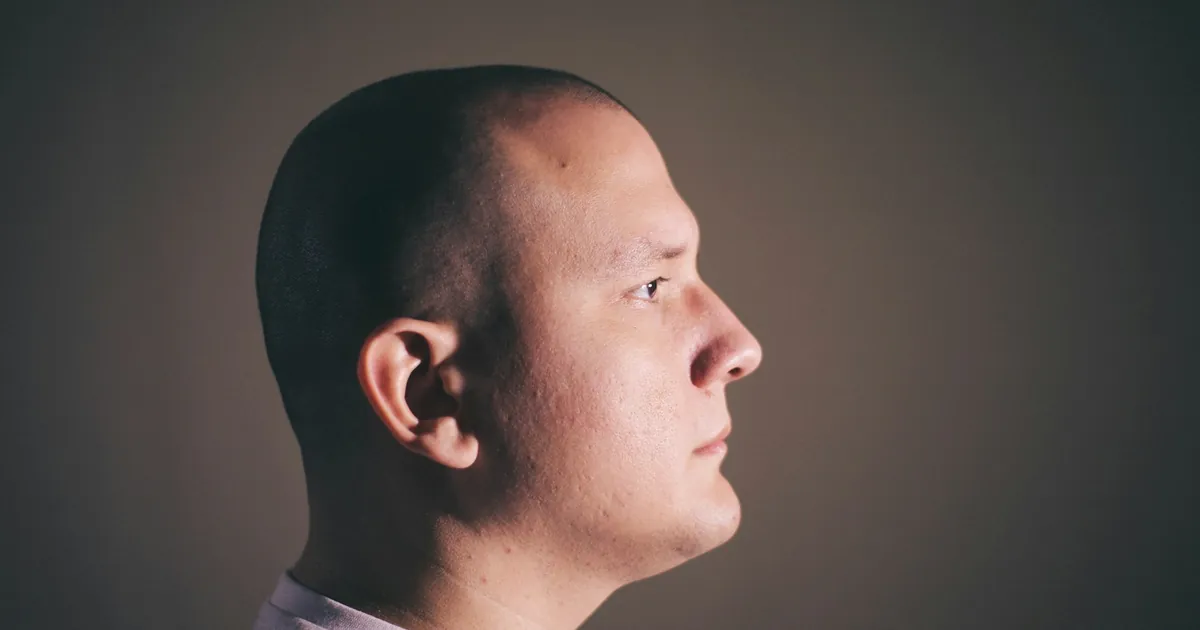
Does jaw surgery change your nose? People ask as soon as double jaw surgery is suggested, since they like their nose or hope it improves. Here is how Op. Dr. Mehmet Cömert, who practises plastic surgery in Istanbul, answers it in consultations: moving the upper jaw can change the base and tip a little, the lower jaw or chin changes how the nose looks, and rhinoplasty reshapes the nose itself.
Does jaw surgery change your nose?
The upper jaw is the floor of the nose. The rim of the nasal opening, the small spine of bone under the nose and the base of the septum sit on it, and the nostril and lip muscles attach around it. When a Le Fort I osteotomy moves this platform, the soft tissue follows to some degree (see our guide to bimaxillary surgery).
A 2019 systematic review of 17 three-dimensional studies found a consistent pattern after Le Fort I surgery: the nose-side tissue and the upper lip shifted forward and outward, while the tip rose and came forward (Paredes de Sousa Gil and colleagues, 2019). Most studies had a high risk of bias, so they cannot predict one person's change. A 2021 meta-analysis of upper jaw advancement alone found weak evidence of change, mainly under the nose rather than at the tip (Almuzian and colleagues, 2021). The reference textbook Facial Aesthetics (Naini, 2025) notes that the nostril base is normally about as wide as the space between the inner corners of the eyes, and that pushing the upper jaw forward or raising it tends to widen the base, by millimetres rather than centimetres.
Does upper jaw surgery change your nose more than lower jaw surgery?
| What is moved | Effect on the nose itself | Effect on how the nose looks |
|---|---|---|
| Upper jaw forward | Base may widen; tip may lift slightly | Lip gains support; the nose often looks more balanced |
| Upper jaw up | Base may widen; septum may need attention | Lower face shortens |
| Upper jaw down or tilted | Base and tip position can change | The lower face lengthens |
| Upper jaw back | Less support under nose and lip | The nose can look more prominent |
| Lower jaw only | No direct change | The nose and chin balance shifts |
| Chin only (genioplasty) | No direct change | Nose usually looks smaller in profile |
In a small three-dimensional study, the nostril base changed only in the two-jaw group; lower jaw advancement alone changed the chin, lower lip and lower cheeks (Almukhtar and colleagues, 2018). After lower jaw setback alone, a CBCT study found no measurable midface change (Park and colleagues, 2013). Setting the upper jaw back is most likely to make a nose look bigger; the textbook notes that advancing the lower jaw instead is sometimes the wiser compromise (Naini, 2025).
This matters for most jaw patients here, because Dr. Cömert rarely moves the lower jaw alone. He describes counterclockwise rotation, a planned tilt of both jaws that brings the lower face forward, as a way to support the upper lip and a flat philtrum. The bone cut beneath the nasal spine (subspinal Le Fort I osteotomy) and the handling of the nostril muscles (muscle-sparing Le Fort I) also matter. Our guide to nose widening after jaw surgery details each movement.
Will my nose look bigger or smaller after jaw surgery?
A nose is never judged alone. The textbook explains that a weak chin makes a normal nose look over-projected, and that the upper lip and even the neck contour change how the nose is seen (Naini, 2025). A review of chin surgery alongside rhinoplasty describes chin deformities as common in people asking for nose surgery (Sykes and Suárez, 2016), and in a British series of 75 jaw patients, most already showed some nasal irregularity before any operation (Seah and colleagues, 2012).
When a nose looks bigger after jaw surgery, the cause is usually early swelling, real widening at the nostril base, or a movement that took support from the upper lip. Research therefore measures nasal change six months or more after surgery (Paredes de Sousa Gil and colleagues, 2019).
Can jaw surgery fix my nose?
Moving the jaws for the nose alone is a big operation for a small, partly predictable change. With a normal bite, our rhinoplasty page is the starting point, sometimes with a chin procedure. Where jaw surgery is needed, it can make a later rhinoplasty smaller, because a supported lip and a stronger chin reduce how far the nose seems to project. Our double jaw surgery page explains how Dr. Cömert plans the jaws together with the nose, chin and cheeks.
Will jaw surgery affect my breathing through my nose?
Raising the upper jaw reduces the space under the nasal floor, yet a 2023 meta-analysis of ten studies found no worsening of nasal airflow or resistance, and quality of life did not worsen (Yong and colleagues, 2023; Koç and Tüz, 2022).
The septum sits on a ridge of the upper jaw, and studies disagree on how often it bends after surgery: one CT study found no change (Moroi and colleagues, 2016), others a change in a sizeable minority, more often when the jaw was both advanced and raised (Asan and colleagues, 2023; On and colleagues, 2020). With very large impactions, septal and turbinate surgery has been added in the same operation (Özcan and colleagues, 2023).
“If the recessed jaw is the problem with the breathing quality, a small genioplasty would be a good idea; but if it's internal, inside the nose, a septorhinoplasty would be the right idea.”
Dr. Mehmet Cömert, from a patient consultation
For snoring and sleep apnoea, see jaw surgery for sleep apnea.
Can rhinoplasty and jaw surgery be done at the same time?
The nose and the jaws are separate decisions, and the jaws are only advised when the CT supports them:
“Facial implants, rhinoplasty: all can be done with or without the bimax. If we see value in the bimax, I wouldn't hesitate, but we need to really evaluate the CT scan.”
Dr. Mehmet Cömert, from a patient consultation
One Italian surgeon combined rhinoseptoplasty with double jaw surgery in 250 consecutive patients, with complications and revisions low and similar to rhinoplasty alone (Raffaini and colleagues, 2018); the same centre later did the same with dorsal preservation rhinoplasty (Raffaini and Arcuri, 2025). Both were retrospective, single-centre series. In an American series of 163 jaw surgery patients, rhinoplasty was combined mainly when the upper jaw moved a little; after a large advancement or impaction it was almost always staged (Sun and Steinbacher, 2018).
The breathing tube for jaw surgery usually passes through the nose, and a combined operation is longer. When many operations are wanted together, Dr. Cömert is direct:
“If we're going to do everything, we need to stage it; I do not recommend doing everything all at once.”
Dr. Mehmet Cömert, from a patient consultation
Should rhinoplasty be done before or after jaw surgery?
A 2023 review describes the same order, with complex cases staged some months after the jaws (Seah and Ilankovan, 2023); in the American series, staged rhinoplasty came roughly seven months later on average (Sun and Steinbacher, 2018). After an earlier rhinoplasty, jaw surgery is still possible; bring your operative notes and say what you want to keep.
What are the risks to the nose, and when is jaw surgery the wrong answer?
- Wider nostril base. In 60 patients after double jaw surgery the base widened on average, and simulation predicted it only approximately (Liebregts and colleagues, 2016). An alar cinch stitch is often used, but studies disagree on how much it holds: a 2019 systematic review found little lasting effect (Paredes de Sousa Gil and colleagues, 2019), while a 3D study of 52 patients could not establish its stability (Jeong and colleagues, 2017). See protecting nasal width and tip projection.
- Tip and nostrils. The tip can lift, show more nostril, or sit unevenly if the septum shifts. Worse nasal breathing is uncommon.
Alternatives. Without a jaw problem, the nose is treated with rhinoplasty and a weak chin with a genioplasty or implant; our article on a recessed lower jaw explains when the chin alone is enough.
Who it does not suit. Anyone having jaw surgery mainly to change the nose, or expecting a particular nose shape from it; people with no functional reason for upper jaw surgery who would not accept any nostril widening; and anyone wanting a full rhinoplasty during a large upper jaw movement.
Next step: how we plan the nose, and what to send us
Final planning is set on a full CT of the face and jaws with dental scans, not on photographs alone. For the nose we look at the nostril base against the inner corners of the eyes, the tip and nostrils from below (a view the textbook recommends; Naini, 2025), the nose and lip angle, lip support, chin projection, the septum and earlier nose surgery. Our double jaw surgery answers explain the scans and digital planning.
- Front and both side photographs, relaxed, head level, plus one smiling profile.
- A photograph of your nose from below and slightly to the side.
- Photographs of your bite in full closure, from the front and both sides.
- Any CT you already have, as files and not only the report. A first look needs only photos and the scans you hold; the final plan needs a CT of the whole face and jaws, because a CBCT of the teeth alone is not sufficient.
- Intraoral scans of your teeth and your orthodontist's records.
- Operative notes from any earlier nose or jaw surgery.
- A note on nasal breathing, snoring and any sleep study.
- If you also want a rhinoplasty, photographs of noses you like.
Prepared by the practice of Op. Dr. Mehmet Cömert, European Board-certified (FEBOPRAS) plastic, aesthetic and reconstructive surgeon, Istanbul. Quotations are from Dr. Cömert's own patient consultations. Sources are listed below. Last updated 20 November 2026. This article is general information and does not replace a personal medical assessment.